TL;DR:
- Everest Base Camp sits at 17,598 feet (approximately 5,364 meters) above sea level.
- The Everest summit is 29,029 feet high.
- The South Base Camp in Nepal is commonly used, sitting at 17,598 feet. The North Base Camp in Tibet is lower at 16,900 feet.
- Acclimatization and health checks are crucial when climbing past heights of 8,000 feet to avoid acute mountain sickness.
- The Everest Base Camp trek costs start from around $1,599, influenced by altitude, safety measures, needed equipment, medical support, and insurance.
- Compared to other base camps like Kilimanjaro, Everest’s base camp sits at an unusually high altitude, making the trek more challenging. The cold temperature at Everest also adds to the demanding nature of the trek.
Ever wondered “How high is Everest Base Camp?” It’s a question every trekker has before embarking on their Himalayan adventure. The answer isn’t as straightforward as you may think. Various factors, from geographical positions to altitude impacts, contribute to the Everest Base Camp’s exact height. Let me guide you through a journey that not only unravels Everest’s majestic height but also compares it with some of the world’s other famous trekking base camps. Ready to ascend?
Table of Contents
What is the exact altitude of Everest Base Camp?
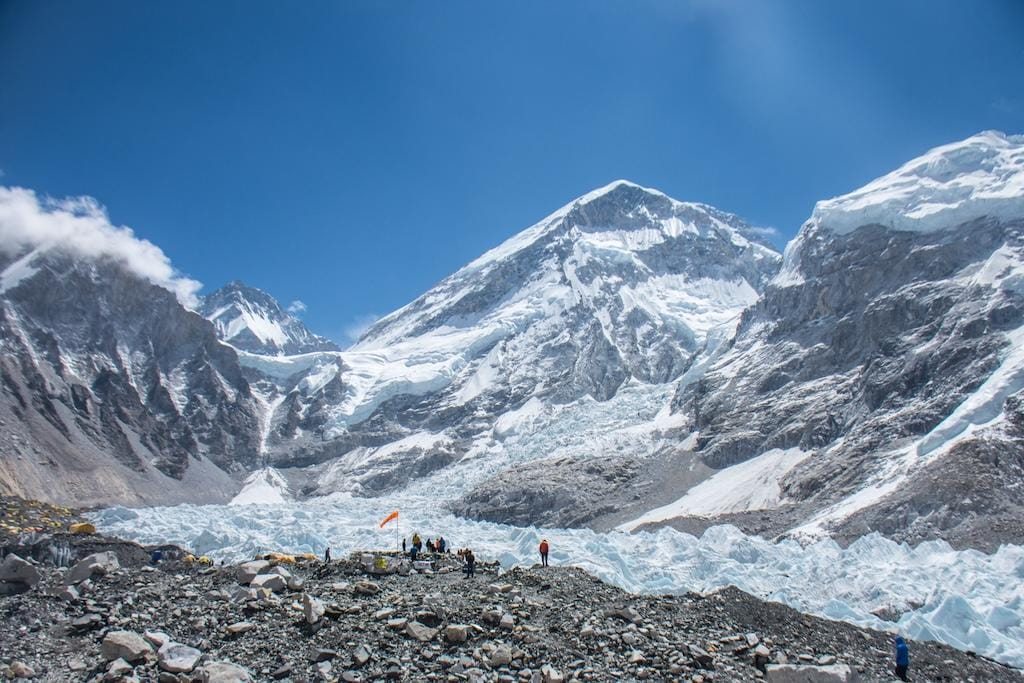
Let’s dive into one of the most asked questions! How high is Everest Base Camp? It sits at a stark 17,598 feet above sea level. Hard to imagine, right? Good news, we’ll break it down.
Understanding the altitude measurement
For context, the peak of Everest itself soars to a breathtaking 29,029 feet. That’s almost 8,848 meters high! Now, when we talk about Everest Base Camp’s elevation, we are pointing to the starting point for most Everest summiting attempts. This spot is still a hefty 17,598 feet above sea level. Picture yourself standing at the height of 66 Eiffel Towers stacked one on top of the other!
The altitude of Base Camp Everest is measured in various units. If you find measurements in meters instead of feet, note that 1 foot is approximately 0.3048 meters. So, 17,598 feet translates to approximately 5,364 meters.
Comparison of North and South Base Camp elevations
Everest forms a border between Tibet and Nepal, resulting in two different base camps. The more famed South Base Camp is in Nepal, while the North Base Camp nests in Tibet.
As trekkers, we mostly speak about the South Base Camp located at 17,598 feet. The North Base Camp in Tibet, however, sits a little lower at 16,900 feet. But guess what? The iconic 80-mile round trip for trekking starts from Lukla and culminates in the South Base Camp, making it the preferred choice for adventurers globally.
But, whichever base camp you choose, always bear in mind that proper acclimatization and health checks are a must. Acute Mountain Sickness (AMS) can be a risk when climbing past altitudes of 8,000 feet. So plan wisely and enjoy the trip at the base camp of the highest peak in the world!
Remember, hitting Everest Base Camp isn’t about being at the highest point on Earth; rather, it’s about the journey, the stunning views, and the hard-earned accomplishment at the end of a strenuous trek. So whether it’s the North or South Base Camp, the altitude is impressive, wouldn’t you agree? Now, tell me, who’s ready for an adventure?
How Does the Altitude Impact the Everest Base Camp Trek?
If you’ve ever wondered about the Everest Base Camp trek height, here’s a fact for you. The trek to the Everest Base Camp, nestled in Nepal, takes you soaring to 17,598 feet. That’s a height that would make a hawk’s heart race. But for us, mortal hikers and trekkers, such altitudes can sure pack a punch in the trek difficulty. They can also lead to health concerns related to the altitude. Now let’s delve into the details and discover how this all pans out.
Impact of Altitude on Trek Difficulty
A bit of a heads-up here. The higher you go, the harder the trek can get. The height measured from Everest Base Camp 1-2 is steep enough to test even seasoned climbers. Air becomes thinner, and each breath you take contains less oxygen. It means you have to work harder for the same amount of activity. Let’s do some quick math. At around 18,000 feet, you have roughly half the oxygen you’d have at sea level. So, the Everest Base Camp trek won’t be like a walk in the local park.
Dealing with Altitude-related Health Challenges
Altitude can be a fickle friend. Past 8,000 feet, it can turn into a foe. Because that’s where you start getting into the zone of Acute Mountain Sickness (AMS), caused by a lack of oxygen. One way to combat this is by taking two full acclimatization days during the trek. See, your body can be a super-star and adjust to Mount Everest basecamp height all by itself given time. Headache, nausea, and difficulty sleeping are the main signs your body needs a little extra time to adapt.
And here’s some parting advice. Always, and I stress on always, take it slow. Pace yourself. Your body will thank you for that. After all, it’s not just the destination, it’s the fascinating journey that counts. So, as you traverse between Namche Bazaar and Mt Everest base in meters, take time to soak in the stunning sights around you. Safe and happy trekking!
How does the route change with Everest Base Camp altitude?
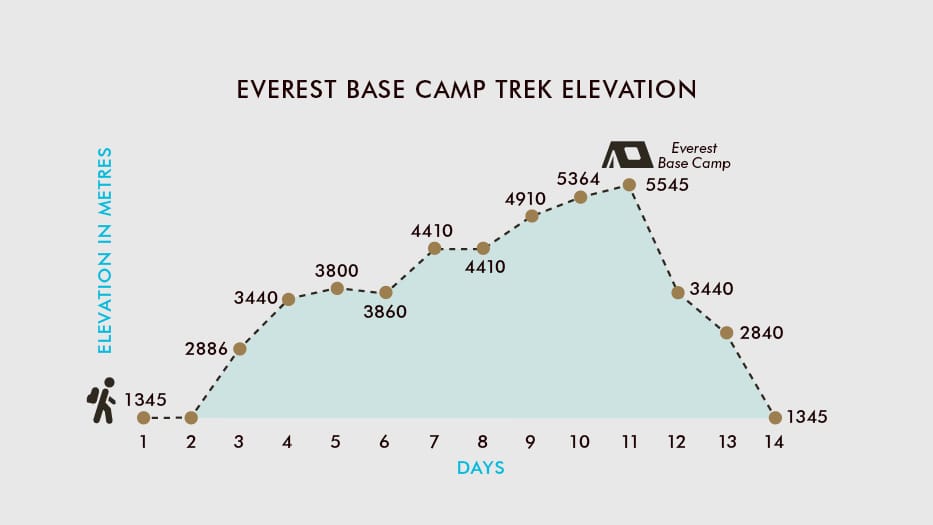
You might wonder about the altitude changes along the route from Everest Base Camp to the summit. It’s an intriguing topic, as this journey takes trekkers through some of the highest points on Earth!
Traveling from Lukla to the Base Camp
The trek to Everest Base Camp kicks off from Lukla, a small town perched at a height of 9,383 feet. From Lukla, the trail winds through forests and along roaring rivers, a stark contrast to the barren, icy landscapes near the top of Mount Everest.
As you trek, the route gradually rises. By the time you set foot in Namche Bazaar, the most significant Sherpa town along the route, you’ll be at a lofty 11,286 feet. Here, the terrain begins to alter, becoming more rugged and open as you leave the alpine forests behind.
The next key altitude milestone comes at Tengboche, a Tibetan Buddhist monastery nestled at 12,680 feet. At this point, all signs of tree life disappear. The terrain transforms into a high-altitude desert, offering trekkers stark, moon-like vistas.
The trail plateaus momentarily at Dingboche, a hamlet at 14,469 feet altitude, staying at this height during the acclimatization day. Afterward, the trail steadily continues upwards until you reach the Everest Base Camp, standing tall at 17,598 feet!
Trek route to the summit from the Base Camp
Now, think about this: the Everest Base Camp’s height is already phenomenal, but it’s only the starting point for climbers aiming for the summit!
Above the base camp, the path drastically changes. The trail transits from trekking to actual Himalayan mountaineering. Climbers ascend steep scree-covered slopes, navigate treacherous crevasses, and traverse ice-covered ridges.
There are four camps between the base and the summit. From Base Camp, the journey to Camp 1 is a mix of glacier crossings and steep climbing. Once at Camp 1, climbers are faced with the infamously demanding Khumbu Icefall, perched at a 19,500 feet altitude.
Camp 2, known as the Advanced Base Camp, is located at 21,000 feet. Situated in a protected valley, it is often used for rest and acclimatization before pushing on to the higher camps.
Further upwards, at 24,500 feet, lies Camp 3. Here, you are literally on the side of the mountain, maneuvering over deep-blue ice and exposed rock. Finally, Camp 4, also referred to as the Death Zone, is situated at a breathtaking 26,085 feet, a stone’s throw away from the peak at 29,031 feet!
In conclusion, the route to Everest’s apex takes climbers through some of the Earth’s most breathtaking, yet challenging environments. From lush valleys to frigid alpine deserts and daunting ridges – it’s a journey that pushes the limits of human endurance and physical capability. True, it’s not a journey for everyone, but it’s an adventure of a lifetime for those who dare to chronicle it!
What is the cost implication of Everest Base Camp’s altitude?
Reaching the dizzying height of Everest Base Camp comes with a price tag that can be equally breathtaking. Let’s understand the cost implications of this phenomenal journey.
Overview of Everest Base Camp Trek costs
Tour packages for the Everest Base Camp trek start at the sizeable sum of $4,295. The high altitude of the base camp, standing proudly at 17,598 feet, is partly responsible for the cost. The altitude brings its own set of needs. Think about added safety measures, equipment for acclimatization, enhanced medical support, and emergency evacuation insurance. All these contribute to the overall cost.
Factors affecting the cost
Complex factors, directly or indirectly connected to the great height we are dealing with, impact the cost. First, the breathtaking vistas from locations like Kala Patthar, Gorak Shep, and Nangkar Tsang. They drive a demand, which in turn drives the price.
Apart from that, Everest’s staggering height throws harsh terrains at us that range from peaceful alpine surroundings to unstable scree-covered ridges. This terrain dictates advanced-level trekking with professional guides, again contributing to the costs.
If we delve further, high altitude means Acute Mountain Sickness (AMS) can be a risk, especially above 8,000 feet. To manage it, two full acclimatization days are generally planned and provisions for advanced medical services are kept. Add these to your budget.
And let’s not overlook trekking necessities. Accommodation en route is generally simple teahouses but remember that everyday comforts might involve more cost at such altitudes. Even food items, although generally humble fare like Dal Bhat or Sherpa Stew, can inflate your expenses due to the difficulty of supplies reaching up here.
As we’ve walked through the costs now, you can see that the incredible height of the Everest Base Camp heavily impacts the overall cost of a trek to its mighty peak. But if you ask any successful trekker, the unique experiences rendered by this journey are worth every penny. Happy trekking!
How do other mountain base camps compare in altitude to Everest Base Camp?
Mount Everest Base Camp sits at an impressive height of 17,598 feet! This makes it one of the highest places in the world where people trek for fun. But how does it compare to other famous mountain base camps across our planet? Let’s find out!
Comparing the altitude of Everest with other Base Camps such as Kilimanjaro
Kilimanjaro in Africa, known for its snow-capped peaks near the equator, is another popular trekking destination. The summit of Kilimanjaro stands tall at 19,341 feet, but its base camp is at a much lower altitude. Compared to Everest Base Camp, Kilimanjaro’s base camp is much easier to reach due to its lower height.
This difference in altitude is one key reason why Everest offers a more challenging trek. The higher you go, the harder it is to breathe. The thin air at Everest’s base camp is just half as dense as at sea level, leading trekkers to train far more intensively and take every precaution when attempting this challenge.
But hold on, we should also bear in mind that the mountain we choose to trek on affects how we adjust to the heights.
Altitude adaptation differences between Base Camps
Trekkers on Everest not just face the height, but also the cold. Everest’s temperature can drop to -25° C (-13°F) at night! We all know that our bodies react differently in varied environments. And so, it is important to consider our own physical capacities and consult with health professionals before undertaking such an adventure.
Adapting to the cold while also coping with the thin air adds to the uniqueness of the Everest Base Camp trek experience. This is why it is often seen as a rite of passage for mountaineers worldwide. However, on the flip side, it also presents severe risks such as Acute Mountain Sickness (AMS), especially at altitudes over 8,000 feet.
So, the height of the base camp isn’t the only important feature, but how we survive at these heights truly matters. This includes knowing how to handle equipment, understanding the terrain, and even the food habits during the trek! Who would have thought that eating a slice of pizza at Everest base camp could be a challenge?
So, while the height poses a thrilling challenge, the sheer resilience needed to take on Everest makes its base camp a notch above the rest. Sure, there are plenty of other mountains with base camps at various heights. Yet, it almost feels like they are just warm-ups, helping us build up to the big challenge – Mount Everest.
Perhaps, in the end, it’s not about how high the base camp is, but how high it can make you feel! After all, venturing on such a trail is more than just a physical task. It’s a journey of self-discovery and unraveling one’s boundaries. And I believe Mount Everest, with its bum-clenching elevation, offers a stage like no other!
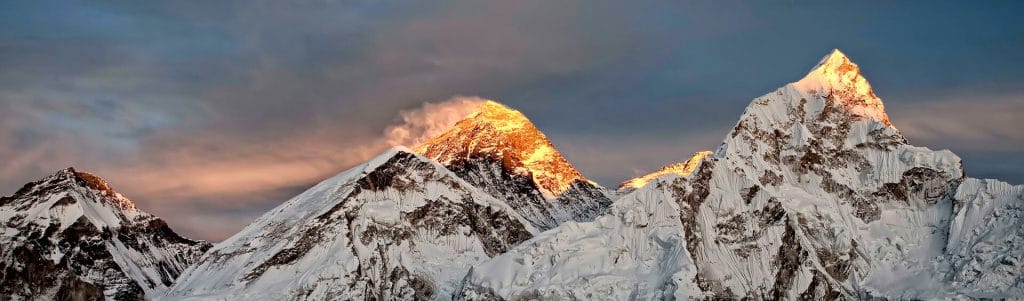
Conclusion
We’ve dived into the captivating heights of Everest Base Camp, from measuring its altitude to its impact during your trek. We’ve explored the changing routes due to the altitude, and cost implications and even compared it with other base camps. Remember, altitude is just one part of your trekking experience. The adventure lies in the journey, not the destination. To every trekker, let your spirit of adventure conquer Everest’s mighty heights. Happy trekking!