To choose a trekking company in Nepal, look for a verifiable operator, an itinerary that fits your experience, a clearly described guiding team and a written quote that explains both inclusions and extra costs. Then ask what happens when the plan changes. A useful answer should help you understand the trip, not simply reassure you that everything will be fine.
You can use the nine checks below when comparing Exotic Mountains with other companies. The aim is to find an operator whose proposal you understand and whose arrangements fit your needs. A low price, a polished website or a long list of five-star reviews cannot answer every booking question.
1. Establish who will actually operate your trek
Ask for the company’s full business name, Nepal office contact and registration or tourism-licence details. Check that the name on the proposal, invoice and payment instructions is consistent. If the names differ, ask for a written explanation of the relationship before paying.
The Nepal Tourism Board’s Tourist Police guidance advises travelers to use government-registered tourism providers. Ask which authority issued the operator’s documents and how you can verify them. If a company claims association membership, the TAAN member directory is one place to check that particular claim. Membership and a tourism licence are different things; neither replaces checking the proposed service.
If you book through an overseas seller or marketplace, ask who provides the guide and local support in Nepal, who holds your booking, and whom you contact if something goes wrong.
2. Compare the actual itinerary, not just the trek name
Two proposals with the same destination can describe different holidays. Put the day-by-day plans side by side and separate arrival days, transfers, walking days, planned acclimatization days and the journey home. Ask for overnight stops and their elevations, rather than relying on a headline duration.
A useful company should explain why it proposes that pace for your experience and dates. Ask what can be adjusted and what would change the cost or arrangements. Do not assume that removing days leaves an otherwise identical trip.
If you are still deciding on a destination, start with our Nepal trekking overview. Choose a suitable route before trying to identify the cheapest version of it.
3. Ask who will guide you and how the team works
Ask about the proposed guide’s route experience, language skills and relevant training. Find out when the guide will be assigned and whether you can speak with them before departure. If a named guide is important to your booking, clarify what happens if that person becomes unavailable.
Get the staffing arrangement in writing: how many travelers share a guide, whether an assistant is included, and whether porter support is part of the quote. Ask who accompanies someone who turns back or needs a different pace. A job title or training claim is more useful when the operator explains how it relates to the actual trip.
4. Turn “all-inclusive” into a written list
Ask for a dated quote for your group and travel dates, with the currency, validity and services stated. A package label cannot tell you which hotel nights, meals, transfers or personal expenses are covered.
- Accommodation: which nights, room sharing, bathroom arrangements and any single-room supplement.
- Meals: which meals on which days, and whether drinks, snacks or dietary arrangements cost extra.
- Transport: the planned services, baggage allowance where relevant, and arrival or departure transfers.
- Team and equipment: guide and porter arrangements, loaned items, rental charges and responsibility for loss or damage.
- Permits and personal spending: which documents and fees the operator includes, and which expenses remain yours.
For lodge-based trips, our teahouse accommodation guide helps you frame room, meal and comfort questions. For permit arrangements, ask the operator to check the current rules for your exact route against the relevant authority, including the Nepal Tourism Board’s route-specific TIMS guidance. This checklist does not establish a permit requirement or fee for every trek.
5. Clarify private trips, group departures and sharing
“Private trek” needs a practical explanation. Does it mean your own guide and walking itinerary, or also private transfers and rooms? Will you join other travelers for any part of the trip?
For a group departure, ask about the expected group size, whether the departure depends on a minimum number, room sharing and how different walking speeds are managed. If you are traveling alone, check the arrangements if a room-sharing partner is not available. Get any essential preference recorded in your booking confirmation.
6. Ask what happens when plans change
Choose one realistic disruption and ask the company to talk you through it: a delayed flight, an extra hotel night, a route change or someone leaving the trek early. Establish who makes decisions, who contacts you, which alternatives might be considered and how additional costs are agreed.
For an Everest itinerary, our Lukla flight-delay planning guide provides questions to discuss with the operator. The point is to understand the contingency process before departure, rather than treat a replacement flight or helicopter as automatically included.
7. Separate operator support from insurance cover
Ask who the guide contacts for assistance, who coordinates with your insurer and how family communication would be handled. Discuss what support is proposed if communication is limited. An operator’s support statement and an insurer’s decision to cover a cost are separate matters.
Check the actual policy with your insurer for your planned activity, route and altitude, including rescue and evacuation terms, exclusions and contact procedures. The UK government’s Nepal trekking advice highlights the importance of mountain-rescue and helicopter-cost cover. Do not treat a trekking company’s description as confirmation of your insurance cover.
8. Ask specific questions about the people carrying your trip
If staff welfare matters to your choice, ask how guides and porters are employed, equipped, accommodated and insured. Ask about the planned carrying arrangement, load policy and what happens if a team member becomes unwell. Request an explanation of the practice behind any responsible-tourism claim.
A broad sustainability statement is less useful for comparison than a clear answer about the team assigned to your trek. Apply the same standard to each company, including us, without assuming that a logo or slogan settles the question.
9. Read the terms and reviews for details that affect you
Before a deposit, read the written payment, cancellation, refund and itinerary-change terms. Ask about the balance deadline, payment charges, what happens if the operator cancels and how a disagreement would be handled. Keep the final proposal and confirmation together so you can distinguish agreed services from options discussed earlier.
Use reviews to investigate the experience you are considering. Look for the route, approximate travel date, group style and specific comments about communication or handling changes. Read critical reviews and the company’s response too. Reviews are one source of evidence; they do not replace a current written agreement.
A simple checklist for comparing your shortlist
For each company, record an answer and the document or message that supports it. Mark unresolved items as questions rather than filling the gaps with assumptions.
- Operator: business name, Nepal contact and verifiable registration details.
- Itinerary: exact stops, walking and transfer days, pace and proposed alternatives.
- People: guide assignment, group size, assistant and porter arrangements.
- Price: dated total, currency, inclusions, exclusions and supplements.
- Changes: decision contact, extra-cost process and cancellation terms.
- Your priorities: the requirements you need explicitly confirmed.
For example, “meals included” in one quote and “breakfast only” in another are not directly comparable. Equally, a higher total is not proof of better guiding. Identify the actual differences before deciding which proposal offers the right value for you.
A message you can send before booking
We are considering [route] around [dates] for [group size]. Our hiking experience is [brief description], and our priorities are [pace, comfort, interests or other needs]. Please send a day-by-day itinerary and dated quote showing the operator’s details, guide and porter arrangements, room and meal inclusions, permits, transport and additional expenses. Please also explain the change and cancellation terms, who supports us during the trip, and how extra costs would be agreed.
Send the same core information to each shortlisted company. Compare how directly their answers address your circumstances. Follow up on anything that remains vague before committing.
To discuss an Exotic Mountains itinerary, share those details through our trip-planning enquiry form. Include the questions that matter most to you so the conversation starts with your requirements.
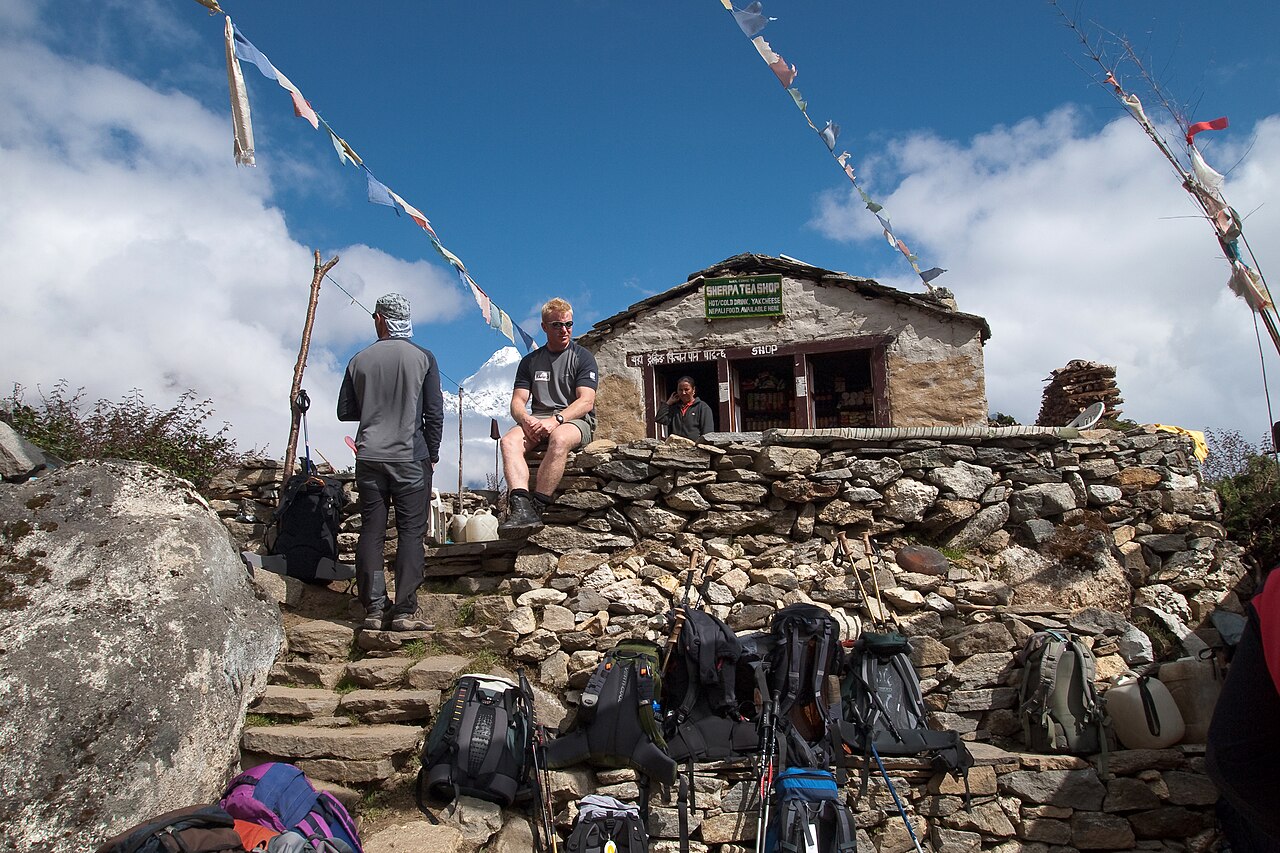
Featured photograph: trekkers at Phortse Tenga, Nepal, October 13, 2009. © Vyacheslav Argenberg / vascoplanet.com, via Wikimedia Commons, CC BY 4.0. Resized. Illustrative photograph; the people shown are not identified as Exotic Mountains staff or clients.


