Annapurna Base Camp (ABC) Trek: Quick Facts
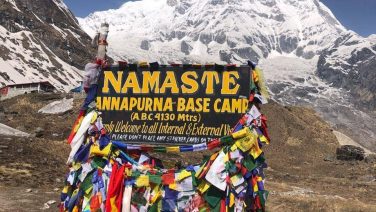
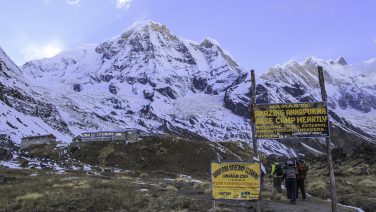
- Maximum Altitude: 4,130 meters (13,549 feet) at Annapurna Base Camp on the South Annapurna Glacier.
- Trail Distance & Duration: Approximately 115 km (71 miles) round-trip over 10 to 14 days (starting from Nayapul, Jhinu Danda, or linked with Poon Hill).
- Difficulty Rating: Moderate — Lower altitude risk than Everest Base Camp (5,364m) or Annapurna Circuit (5,416m), but physically demanding due to over 3,300 relentless stone stairs.
- Trailhead Access: Driven via private jeep or tourist car from Pokhara (2.5 to 3.5 hours to Nayapul / Jhinu Danda). No high-altitude mountain flights required.
- Required Permits (2026): ACAP (NPR 3,000 / ~$23 USD) + TIMS Card (NPR 2,000 / ~$15 USD) with a mandatory licensed trekking guide.
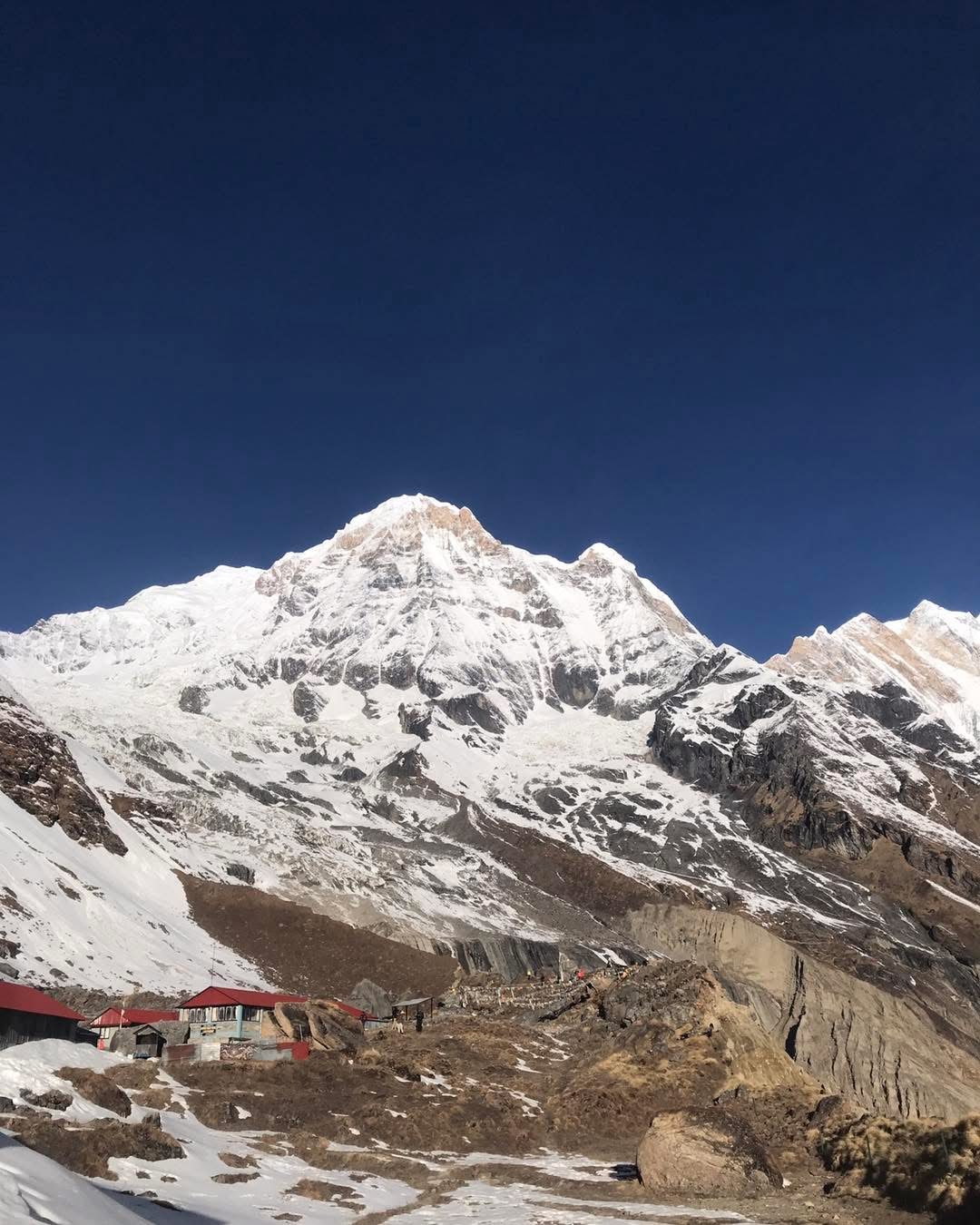
The Annapurna Base Camp Trek (often called the ABC Trek or Annapurna Sanctuary Trek) is one of the most revered trekking journeys on earth. Unlike linear pass crossings, the trail leads deep into a sacred, enclosed glacial basin surrounded by a colossal fortress of peaks exceeding 7,000 and 8,000 meters.
Because the trek starts from the subtropical foothills of Pokhara and tops out at a manageable 4,130 meters, it is widely considered the ideal Himalayan trek for active hikers who want dramatic high-altitude scenery without the prolonged extreme-altitude exposure or flight delays associated with Everest Base Camp. However, the route’s thousands of steep stone steps and the narrow avalanche corridors of the upper Modi Khola gorge require thoughtful preparation.
Annapurna Base Camp Route Overview & Key Stages
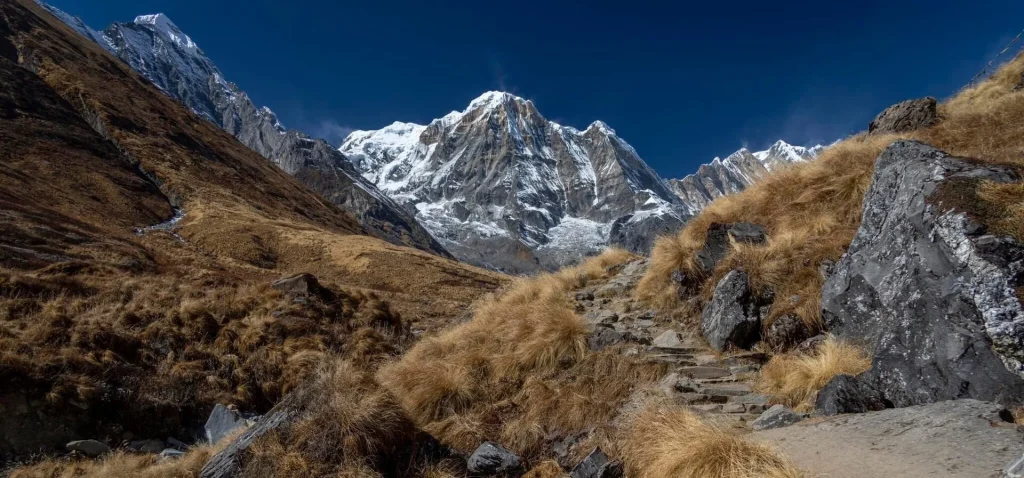
The classic Annapurna Base Camp route follows the Modi Khola river valley north into the heart of the Annapurna range. Most trekkers incorporate the famous sunrise viewpoint of Ghorepani Poon Hill (3,210m) on the ascent, cross through the village of Chhomrong, and continue up the glacial canyon through Bamboo and Deurali into the Sanctuary.
| Route Stage | Altitude (Meters / Feet) | Terrain & Walking Highlights |
|---|---|---|
| Pokhara → Nayapul / Tikhedhungga | 1,540 m (5,052 ft) | Jeep drive from Pokhara followed by terraced farmland walking |
| Tikhedhungga → Ghorepani | 2,874 m (9,429 ft) | The infamous 3,200+ stone stairs of Ulleri into rhododendron forest |
| Poon Hill Sunrise → Tadapani | 3,210 m / 2,630 m | Pre-dawn sunrise over Dhaulagiri and Annapurna; descent through mossy forest |
| Tadapani → Chhomrong | 2,170 m (7,119 ft) | Gateway village to the Sanctuary; terraced Gurung village with Fishtail views |
| Chhomrong → Dovan / Bamboo | 2,505 m (8,218 ft) | Steep descent down 2,000 stone steps to Chhomrong Khola, then climb up to Sinuwa |
| Dovan → Deurali | 3,200 m (10,498 ft) | Dense bamboo forests give way to alpine shrubs and steep gorge cliffs |
| Deurali → Machhapuchhre Base Camp (MBC) | 3,700 m (12,139 ft) | Entering the gateway of the Sanctuary past Hinku Cave; wide valley opening |
| MBC → Annapurna Base Camp (ABC) | 4,130 m (13,549 ft) | Gentle 2-hour glacial ascent into the 360-degree mountain amphitheater |
| ABC → Bamboo → Jhinu Danda | 1,780 m (5,839 ft) | Descent out of the gorge; natural riverside hot springs at Jhinu Danda |
Annapurna Base Camp Difficulty: The Honest Reality Check
Guidebooks often classify Annapurna Base Camp as a “Moderate” trek. While it does not require technical mountaineering skills or crampons, it presents two specific physical challenges that catch many hikers off guard:
1. The Relentless Stone Stairs (Ulleri & Chhomrong)
The Annapurna foothills are crisscrossed by ancient stone staircases built by local communities. Between Tikhedhungga and Ulleri alone, you must climb more than 3,200 steep stone steps in a single morning. Later, crossing the Chhomrong valley requires descending over 2,000 stone steps to the suspension bridge, followed immediately by climbing another 1,500 steps up to Sinuwa—a sequence you must repeat on the return journey. For this reason, trekking poles and knee braces are essential.
2. The Avalanche Caution Zone: Deurali to MBC
The section of trail between Deurali and Machhapuchhre Base Camp passes through a narrow river canyon flanked by the vertical rock walls of Hiunchuli and Machhapuchhre. In late winter and early spring (February through April), heavy snowmelt from the upper cliffs can trigger avalanches across the main trail near Hinku Cave. During active snow conditions, experienced guides divert across the winter route on the opposite bank of the Modi Khola.
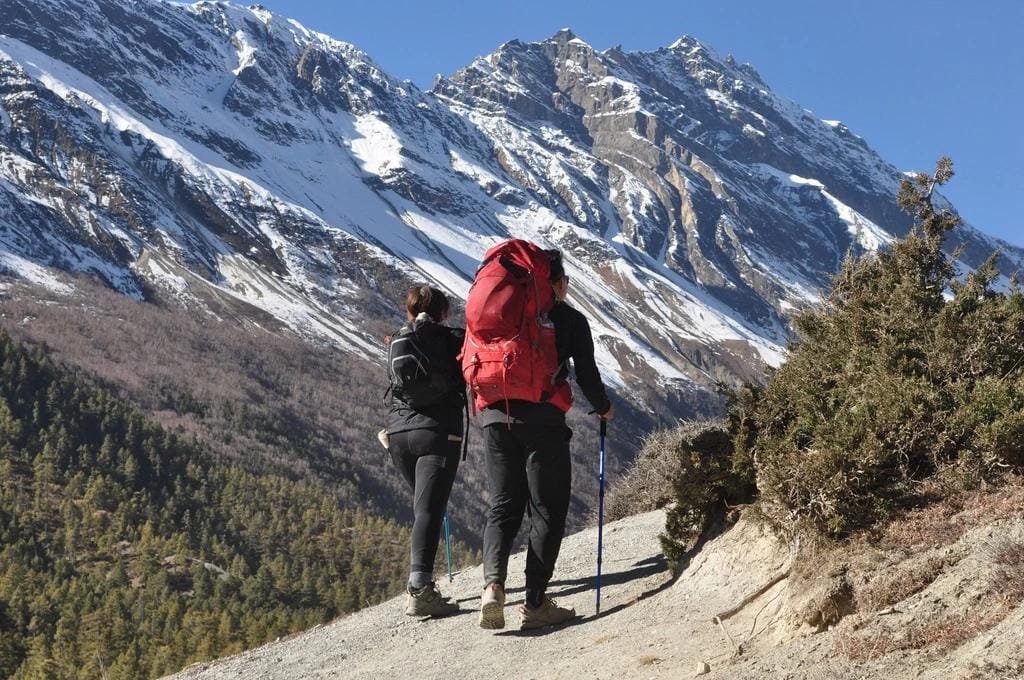
Annapurna Base Camp vs. Annapurna Sanctuary: What Is the Difference?
Travelers often ask whether the Annapurna Base Camp Trek and the Annapurna Sanctuary Trek are different routes. In geography, they describe the same place: the “Sanctuary” is the vast, sacred glacial bowl, while “Annapurna Base Camp” is the teahouse cluster and mountaineering staging area situated at the head of the basin at 4,130 meters.
To the indigenous Gurung people, the Sanctuary is sacred ground (the dwelling of the mountain deities). Historically, meat, eggs, and leather items were forbidden inside the gorge beyond Bamboo. Today, modest teahouses operate inside the sanctuary, but respecting local cultural reverence remains paramount.
Permits, Costs & Mandatory Guide Regulations (2026)
Before beginning your ABC trek, you must secure official permits through an authorized trekking agency in Kathmandu or Pokhara:
- ACAP Entry Permit: NPR 3,000 (~$23 USD) per foreign national (NPR 1,000 for SAARC citizens).
- TIMS Card: NPR 2,000 (~$15 USD) with agency sponsorship.
- Mandatory Guide Rule: As mandated by the Nepal Tourism Board, all foreign trekkers venturing on the Annapurna Base Camp trail must be accompanied by a government-licensed guide. Solo unguided trekking is strictly checked at entry checkpoints in Birethanti and Ghandruk.
Best Time to Trek Annapurna Base Camp
Annapurna Base Camp has two prime trekking seasons:
- Autumn (Late September to November): The most popular season. Skies are crystal clear following the monsoon, daytime temperatures are mild (15°C to 20°C in the foothills, 0°C to -5°C at ABC at night), and visibility of the peaks is flawless.
- Spring (March to May): Spectacular wild rhododendron blooms drape the hillsides in vibrant pink and scarlet red between Ghorepani and Tadapani. Temperatures are warmer, though afternoon haze can occasionally build before clearing at dusk.
- Winter (December to February): Quiet trails and crisp air, but temperatures drop to -10°C at Base Camp and heavy snowfall can temporarily block the upper gorge.
- Monsoon (June to August): Not recommended for ABC due to heavy downpours, slippery stone stairs, leeches in the forest, and high landslide risk in the Modi Khola canyon. If trekking in summer, choose Upper Mustang instead.
Annapurna Base Camp Trek: Frequently Asked Questions
How long does it take to trek to Annapurna Base Camp?
A comfortable guided trek takes 10 to 14 days from Pokhara or Kathmandu. A 14-day itinerary allows time to include the Ghorepani Poon Hill sunrise loop and built-in rest days, keeping daily walking to a manageable 5 to 6 hours.
Can beginners trek to Annapurna Base Camp?
Yes. Active beginners with good cardiovascular fitness and prior hill-walking experience can complete the ABC trek. Because the maximum sleeping altitude is 4,130m—compared to 5,164m at Gorak Shep on the Everest trek—the risk of acute mountain sickness is lower, provided you maintain a steady pace.
Do I need travel insurance for Annapurna Base Camp?
Yes. Even though ABC is lower than Everest, the narrow canyon terrain means that severe injuries or acute altitude illness require emergency helicopter evacuation back to Pokhara or Kathmandu. Ensure your policy explicitly covers trekking up to 4,500 meters and helicopter rescue. See our guide to the best travel insurance for Nepal trekking.
Related Annapurna Trekking Resources
- Best Annapurna Region Treks (2026): Which Annapurna Trek Is Right for You?
- Annapurna Circuit Preparation: Are You Ready for Thorong La?
- Annapurna Circuit vs. Everest Base Camp: Complete Comparison
- Upper Mustang Trek Guide (2026): Permits, Costs & Lo Manthang
- Pokhara Travel & Nightlife Guide: Best Lakeside Restaurants & Cafes
Experience the Annapurna Sanctuary with Exotic Mountains
Exotic Mountains’ Managing Director, Rajan Dhamala, started his mountain career carrying loads to Annapurna Base Camp as a young porter. Today, our agency leads guided ABC treks rooted in ethical porter treatment, experienced local Sherpa guides, and personalized pacing.
14-Day Annapurna Base Camp & Poon Hill Trek (4,130m)
Includes private Pokhara trailhead transfers, ACAP & TIMS permits, experienced licensed English-speaking guide, fair-wage porter support, all teahouse lodging, and a relaxing stop at Jhinu natural hot springs.