November is widely celebrated as the connoisseur’s window for trekking in Nepal. While October commands the initial post-monsoon rush, November delivers what many seasoned Himalayan trekkers and landscape photographers consider the finest mountain environment of the entire year: extraordinarily dry air, stable high-pressure systems, and unmatched crystal clarity that stretches uninterrupted across the Great Himalaya range.
By November, the summer monsoon’s lingering humidity has vanished completely, leaving crisp, blue-sky days free from the spring dust haze. As festival holidays wind down and October’s peak crowds taper off, the trails return to a peaceful, contemplative rhythm. However, November introduces an unmistakable thermal shift. Daylight hours shorten, and sub-zero nighttime temperatures become standard across higher elevations. Understanding how early November differs from late November—and matching your route to your cold tolerance—is the key to an unforgettable Himalayan expedition.
November Weather and Temperature by Elevation
Weather across Nepal in November is remarkably predictable and dry. Rainfall is practically non-existent throughout the month. The primary dynamic to manage is the diurnal swing: pleasant, warm walking under intense mountain sun by day, followed by an immediate drop into freezing temperatures the moment the sun dips behind the towering ridgelines.
| Elevation Zone | Representative Locations | Daytime Temp (°C / °F) | Nighttime Temp (°C / °F) | Trail Conditions |
|---|---|---|---|---|
| Lowlands & Valleys (800m – 1,500m) | Kathmandu, Pokhara, Besisahar | 18°C to 24°C (64°F to 75°F) | 8°C to 11°C (46°F to 52°F) | Warm, sunny, dry walking; golden autumn terrace harvest |
| Mid-Hills & Forests (2,000m – 3,500m) | Namche Bazaar, Chame, Ghorepani | 10°C to 15°C (50°F to 59°F) | -2°C to 4°C (28°F to 39°F) | Dry, firm trails; crisp morning frost that melts rapidly under sun |
| High Alpine & Base Camps (3,800m – 5,400m) | Dingboche, Gorak Shep, ABC, Thorong Phedi | 0°C to 7°C (32°F to 45°F) | -8°C to -16°C (17°F to 3°F) | Clear, dry, frozen ground and streams; notable wind chill at exposed passes |
Early November vs. Late November: The first half of November retains pleasant daytime warmth, making it prime time for 5,000-meter pass crossings such as Thorong La or Larkya La. By late November, winter begins its advance into the upper Himalaya. Daytime temperatures above 4,200 meters hover close to freezing, and high-altitude teahouses begin draining water pipes overnight and preparing for seasonal winter closures.
November vs. October: Which Month Fits You Best?
If you are weighing a trek between trekking in Nepal in October versus November, consider these practical differences:
- Atmospheric Clarity: While October is renowned for post-monsoon freshness, early October can occasionally experience lingering cloud banks. November boasts the lowest relative humidity and the sharpest mountain contrast of the year.
- Crowd Density: Foot traffic on primary trekking corridors (such as Lukla to EBC and Ghorepani Poon Hill) drops by 30% to 50% between late October and mid-November. Lodge dining halls are quieter, and securing private rooms is straightforward.
- Nighttime Cold: October is noticeably milder at high altitude. If you are sensitive to cold nights or traveling with family, October provides gentler conditions. If you have a solid 4-season sleeping bag and warm thermal layers, November’s serene trails offer a superior wilderness experience.
- Shorter Daylight: November days are shorter. Setting off by 7:30 AM allows you to complete your daily walking well before the 4:30 PM afternoon temperature plunge.
Top 5 Treks in Nepal for November
Here is how Nepal’s premier trekking routes perform during November:
1. Everest Base Camp & Kala Patthar (15 Days)
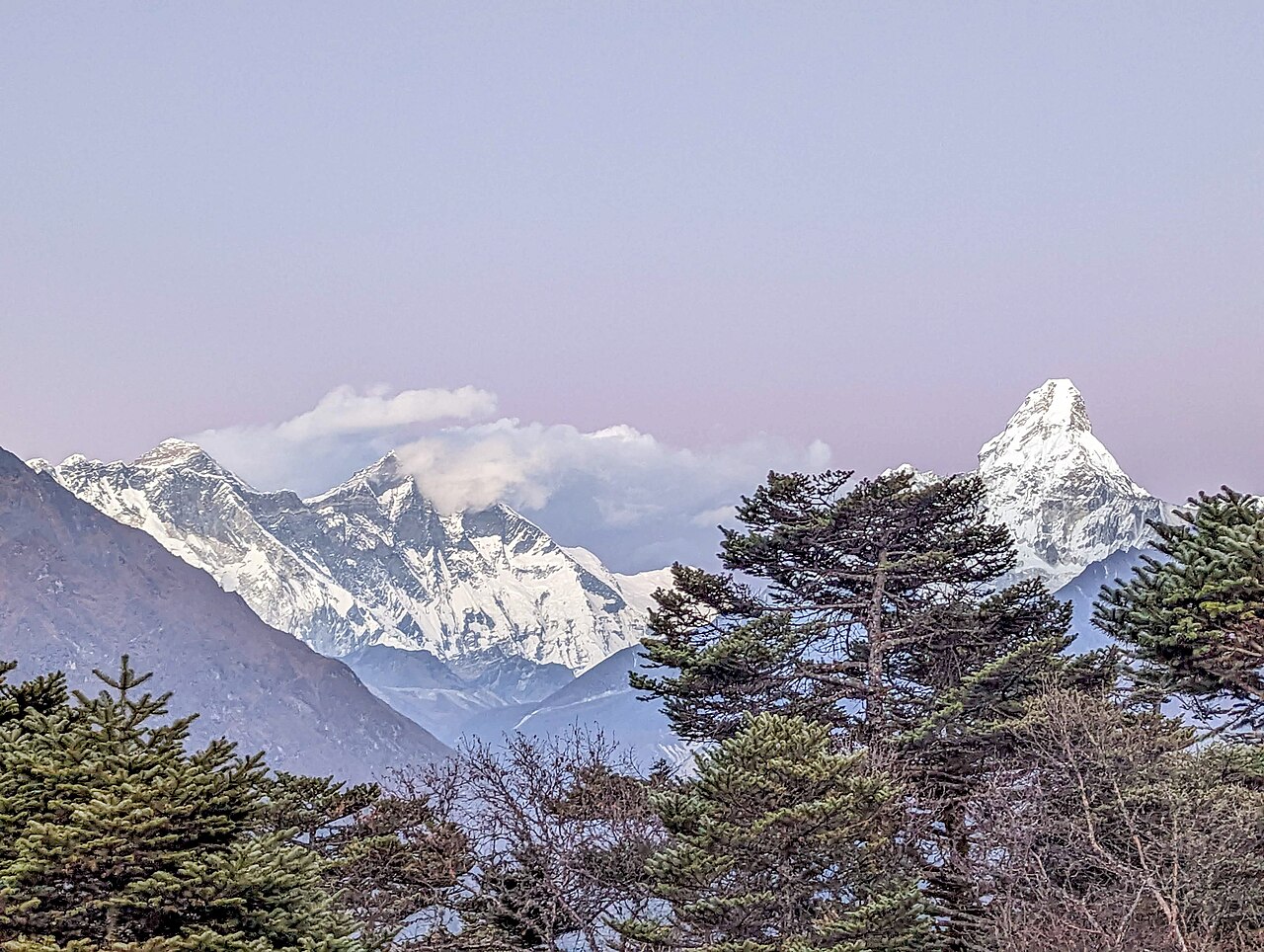
November delivers postcard-perfection in the Khumbu. Mount Everest, Lhotse, Nuptse, and Ama Dablam stand in sharp relief against vivid blue skies. While the dawn hike up Kala Patthar (5,545m) is bitterly cold (-12°C to -15°C), the horizon-wide panoramas extending to Makalu are peerless. Understanding the exact Everest Base Camp height (5,364m) and oxygen levels is critical for pacing your acclimatization before arriving at Gorak Shep.
Logistics Tip: If your trek starts during the tail-end of October traffic, flights to Lukla may operate out of Ramechhap. Consult our updated Ramechhap to Lukla Flight Guide 2026 to plan your transfer, and explore our guided 15-Day Everest Base Camp Trek.
2. Annapurna Base Camp / Sanctuary (12–14 Days)
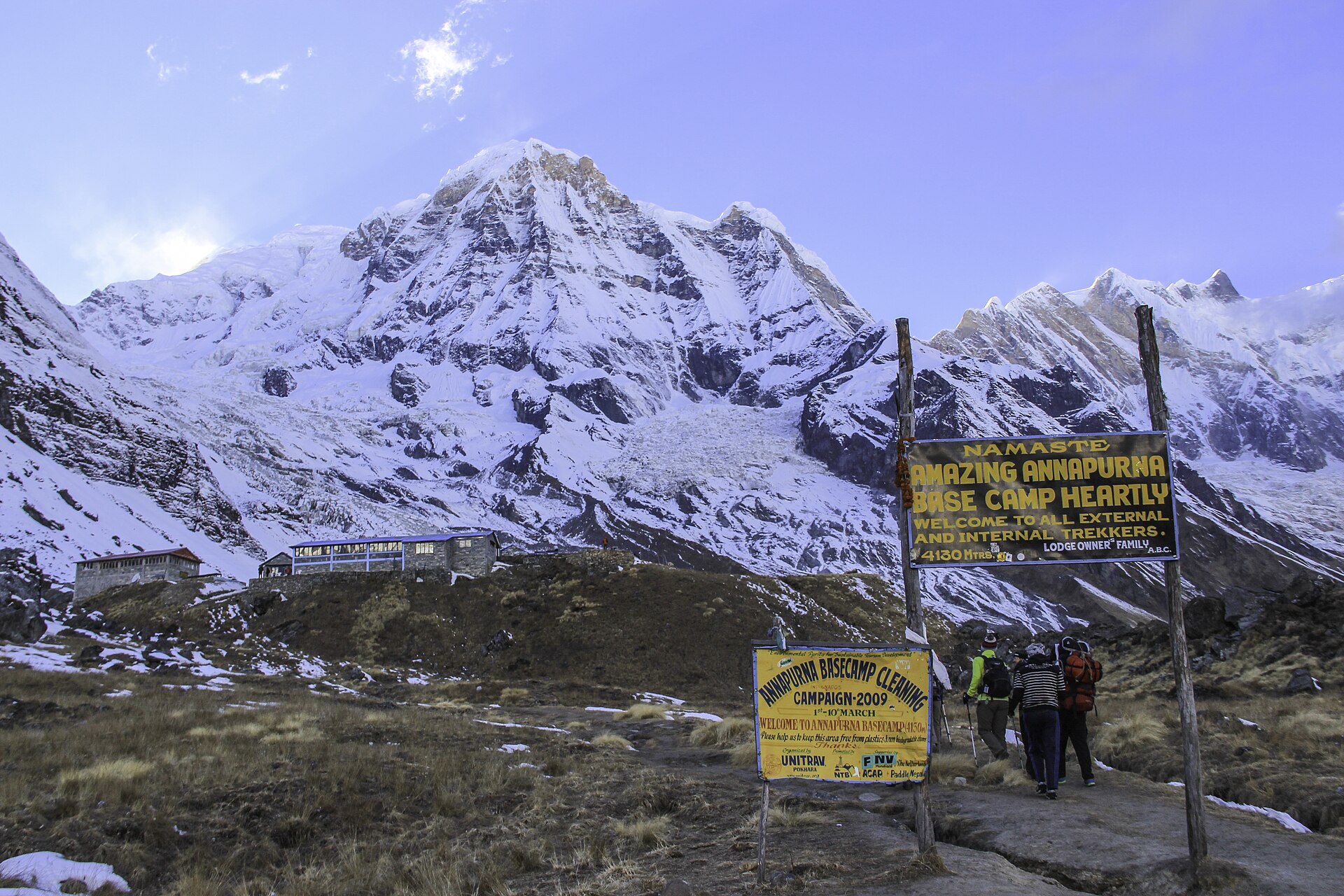
Trekking into the Annapurna Sanctuary is naturally sheltered from the fierce plateau winds experienced on high trans-Himalayan passes. Ascending through bamboo forests to Machhapuchhre Base Camp and Annapurna Base Camp (4,130m) provides crisp, stable walking conditions with negligible avalanche hazard compared to springtime. Dawn illuminating the sheer south face of Annapurna I is breathtaking.
3. Mardi Himal Trek (9 Days) — The Panoramic Ridge Alternative
For trekkers seeking an intimate, shorter lodge trek with front-row mountain views, the Mardi Himal Trek is ideal in November. Walking high along the open ridge line directly below Machhapuchhre (Fishtail) delivers expansive vistas of the Annapurna range and the Pokhara valley below without the trail congestion of older classic routes.
4. Langtang Valley & Kyanjin Ri (8–10 Days)
Reachable by road directly from Kathmandu without domestic flights, the Langtang Valley is an accessible November gem. Hikes up to Kyanjin Ri (4,773m) or Tserko Ri (4,984m) offer expansive views toward Langtang Lirung and the Tibetan frontier. Daytime temperatures remain comfortable, and Tamang hospitality is at its most authentic.
5. Annapurna Circuit & Manaslu Circuit (Early to Mid-November)
Both the Annapurna Circuit and the restricted-area Manaslu Circuit are in prime condition during the first half of November. Crossing Thorong La (5,416m) or Larkya La (5,106m) offers firm, dry footsteps. If crossing either pass in late November, maintain schedule flexibility for weather windows and ensure your guide team carries traction microspikes.
Cultural Highlight: The Mani Rimdu Festival at Tengboche
One of the finest cultural reasons to trek in the Everest region during November is Mani Rimdu, the most sacred annual festival of the Khumbu Sherpa community. Held at the historic cliffside monastery of Tengboche Gompa according to the Tibetan lunar calendar (falling in late October or November), the celebration spans several days of monastic rituals.
Trekkers who coincide with Mani Rimdu witness monks performing elaborately costumed mask dances (Cham) depicting Buddhist protectors triumphing over negative spiritual forces. Accompanied by the deep resonance of long Tibetan horns (dungchen), cymbals, and chanting prayers, the festival against the dramatic backdrop of Ama Dablam is an unforgettable cultural immersion.
Essential Packing Advice for November
Packing for November requires disciplined cold-weather layering for high elevations:
- Down Sleeping Bag (-15°C / 5°F rating): Teahouse quilts provide supplementary warmth, but an insulated down bag is indispensable for high-altitude sleeping (above 3,800m).
- Heavy Down Parka (750–800 Fill Power): Vital for evenings in unheated dining rooms, early pre-dawn departures, and high scenic viewpoints.
- Insulated Water Bottles: CamelBak bladders and exposed drinking hoses freeze solid above 4,000 meters in November. Use wide-mouth Nalgene bottles with thermal sleeves, filled with boiled water before bed to warm your sleeping bag.
- Microspikes: Essential for shaded morning trails and icy switchbacks on north-facing descents.
- Thermal Merino Layers & Balaclava: Two complete base-layer sets plus a windproof neck gaiter or balaclava to prevent the dry, irritated throat commonly known as the “Khumbu cough.”
- Battery Storage: Cold alpine air drains electronics quickly. Keep camera batteries, phones, and power banks in inside pockets close to your body heat.
Permits & Planning with Exotic Mountains
All autumn treks in Nepal require valid conservation entry permits (such as Sagarmatha National Park or ACAP) and TIMS cards. Restricted areas like Manaslu require special permits organized through a licensed Nepali agency with a certified guide and a minimum group of two.
With autumn flight scheduling and mountain teahouse logistics requiring seasoned coordination, partnering with the experienced Himalayan team at Exotic Mountains guarantees safety, licensed high-altitude leadership, and seamless logistics from Kathmandu to the high trails.
Ready to plan your trek under Nepal’s clearest November skies? Connect directly with our team on WhatsApp at +1 (682) 487-7207 or email us at [email protected] to finalize your 2026 itinerary.