October is widely regarded as the gold standard month for trekking in Nepal. As the summer monsoon rains withdraw across the Bay of Bengal, they leave behind freshly scrubbed atmosphere, crystal-clear Himalayan skies, and crisp, energizing mountain air. From the soaring towers of the Khumbu to the dramatic amphitheater of the Annapurnas, mountain vistas are at their sharpest, and high alpine passes are in prime condition.
However, trekking in Nepal in October is not without its trade-offs. Because the conditions are universally known to be peak, October is also the single busiest month on Nepal’s classical trails. Choosing the right itinerary depends on understanding daytime versus nighttime temperatures, high-pass accessibility, teahouse booking realities, and whether you prefer celebrated classics or quieter wilderness alternatives. (Planning later in the autumn season? Compare conditions and thinning trail crowds in our comprehensive guide to trekking in Nepal in November.)
October Weather and Temperature by Elevation
In October, Nepal experiences remarkably stable weather patterns with minimal rainfall and predictable diurnal cycles: sunny mornings, mild midday walking conditions, and rapid cooling once the sun dips behind the ridgelines.
| Elevation Zone | Representative Locations | Daytime Temp (°C / °F) | Nighttime Temp (°C / °F) | Trail Conditions |
|---|---|---|---|---|
| Lowlands & Valleys (800m – 1,500m) | Kathmandu, Pokhara, Besisahar | 22°C to 27°C (71°F to 80°F) | 13°C to 16°C (55°F to 61°F) | Warm, lush green terraces, sunny walking |
| Mid-Hills & Forests (2,000m – 3,500m) | Namche Bazaar, Chame, Ghorepani | 14°C to 19°C (57°F to 66°F) | 3°C to 7°C (37°F to 45°F) | Dry, firm trails, comfortable t-shirt and light fleece weather |
| High Alpine & Base Camps (3,800m – 5,400m) | Dingboche, Gorak Shep, ABC, Thorong Phedi | 5°C to 11°C (41°F to 52°F) | -4°C to -10°C (25°F to 14°F) | Sub-zero nights, clear mornings, frozen streams at dawn |
Because humidity drops sharply compared to September, morning cloud cover is rare. You can generally count on uninterrupted mountain views from dawn through early afternoon. By late afternoon, convective clouds occasionally drift up the river valleys, but precipitation in October is exceptionally rare compared to the monsoon months.
The October Trade-Off: Peerless Skies vs. Trail Crowds
The primary consideration for trekking in October is crowd management. Major commercial trekking corridors—particularly the classical Lukla-to-Base-Camp route and the lower Annapurna trail—experience high volumes of international trekkers.
- Teahouse Accommodations: Popular bottleneck settlements such as Namche Bazaar, Tengboche, Gorak Shep, and Thorong Phedi frequently run near 100% capacity. Independent trekkers without advance agency bookings may find themselves sleeping in dining halls. Traveling with a licensed local operator like Exotic Mountains guarantees reserved beds and private lodge rooms.
- Trail Pacing: Suspension bridges and narrow stone staircases can see brief bottlenecks during peak morning walking hours. Starting 30 to 45 minutes earlier in the morning easily avoids the main group surges.
- Atmosphere: On the positive side, October brings vibrant camaraderie to teahouse dining halls, with hikers from around the globe sharing stories around communal wood and yak-dung stoves.
- Seeking Quieter Trails? Trekkers looking for crisp post-monsoon visibility without October’s peak teahouse pressure often shift their window by two to three weeks into November, when trail traffic drops by 30% to 50%. Read our November Nepal Trekking Guide to explore late-autumn trade-offs.
Top 5 Treks in Nepal for October
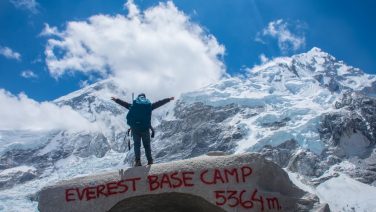
1. Everest Base Camp Trek (15 Days)
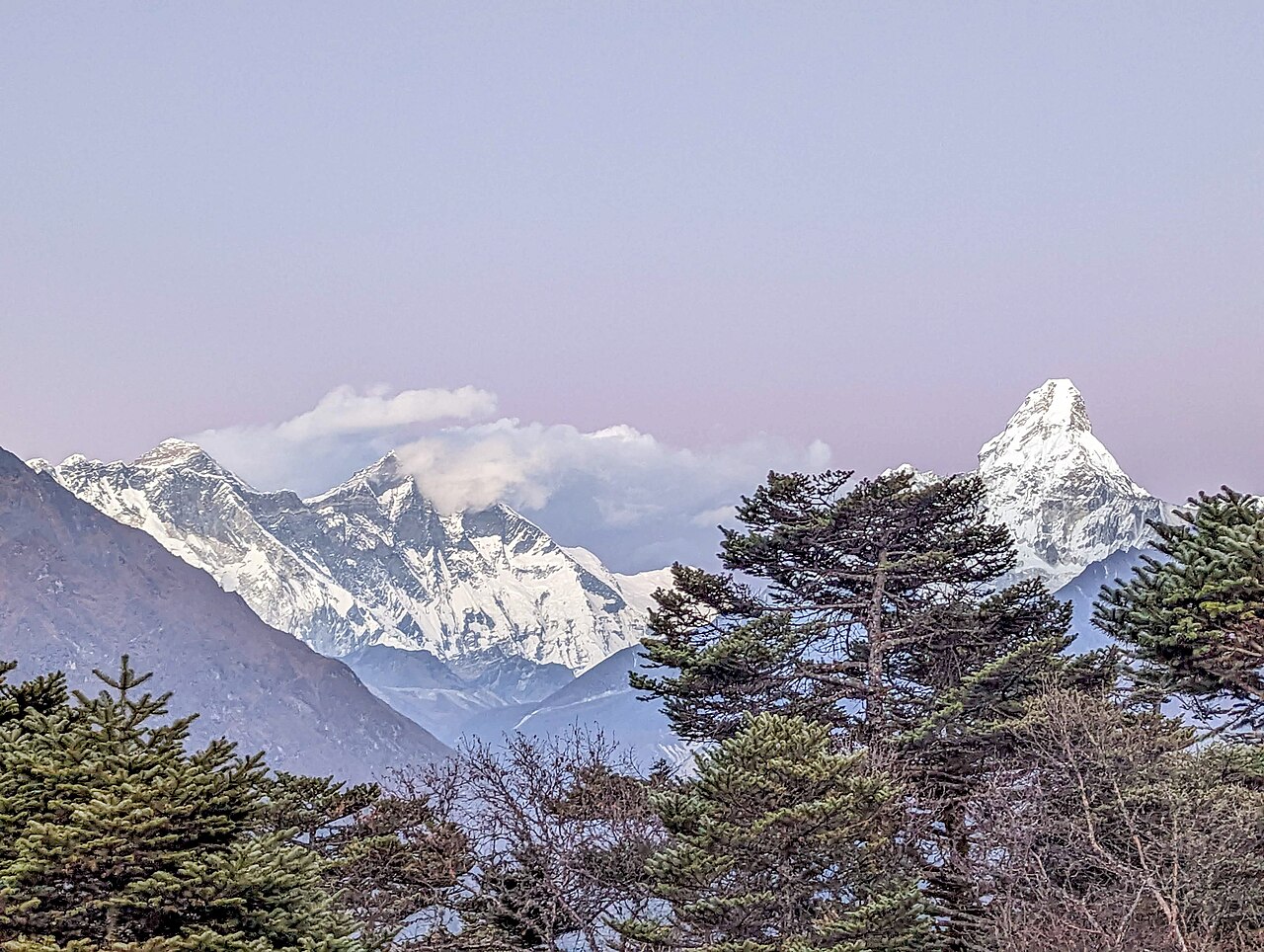
October offers the highest probability of clear morning vistas of Mount Everest, Lhotse, Nuptse, and Ama Dablam. The iconic sunrise hike from Gorak Shep up to Kala Patthar (5,545m) is at its most spectacular, with horizon-wide Himalayan panoramas stretching from Cho Oyu to Makalu.
Pro-Tip for 2026: During peak October, the Civil Aviation Authority of Nepal (CAAN) regularly shifts Lukla flights from Kathmandu to Manthali Airport in Ramechhap (a 4-hour pre-dawn drive from Kathmandu) to avoid air traffic congestion. Preparing for this transfer in advance ensures a seamless start to your expedition. Explore our 15-Day Guided Everest Base Camp Trek.
2. Annapurna Base Camp & Sanctuary (14 Days)
October delivers sublime weather for stepping into the majestic Annapurna Sanctuary. Ringed by eight peaks soaring over 7,000 meters—including Annapurna I (8,091m), Annapurna South, and Machhapuchhre—the trail climbs through lush rhododendron forests and Gurung heritage villages before reaching the glacial basin at 4,130m. It combines moderate physical demand with peerless mountain drama. View our fully supported 14-Day Annapurna Base Camp Trek Package ($1,299) or consider the full 18-Day Annapurna Circuit Itinerary for high-pass crossing via Thorong La (5,416m).
3. Manaslu Circuit Trek (15 Days) — The Quieter Alternative
For trekkers who want high-altitude grandeur without the density of Everest or Annapurna, the Manaslu Circuit is the premier choice in October. Flanking the world’s eighth-highest peak (8,163m), this restricted-area trek provides authentic Tibetan-Buddhist village culture in Nubri and Samagaon, followed by a dramatic crossing of Larkya La Pass (5,106m). Check the 15-Day Manaslu Circuit Trek Details.
4. Langtang & Sacred Gosaikunda Lakes (14 Days)
Located just north of the Kathmandu Valley, Langtang offers a rich blend of Tamang heritage, yak cheese factories at Kyanjin Gompa, and the sacred glacial lakes of Gosaikunda (4,380m). October brings glassy lake reflections and crystal views from Laurebina Pass without requiring domestic flights. See our 14-Day Langtang Gosaikunda Trek.
5. Short Treks: Mardi Himal & Ghorepani Poon Hill (9 Days)
If you have limited time or are trekking with family, shorter Annapurna trails are ideal in October. The Mardi Himal Trek takes you along an intimate alpine ridge directly beneath the sacred peak of Machhapuchhre (Fishtail), while Ghorepani Poon Hill delivers legendary sunrise panoramas over Dhaulagiri and Annapurna South.
Cultural Highlights: Dashain and Tihar Festivals
An extraordinary dimension of trekking in Nepal in October is experiencing Dashain and Tihar, Nepal’s two grandest national festivals. Villages along the trekking routes are adorned with colorful banners, massive bamboo swings (lingo ping) are erected on hillsides for community celebrations, and local children fly homemade paper kites against mountain backdrops.
Trekkers often receive red tika (rice and vermilion) blessings and barley shoots (jamara) from teahouse owners and Sherpa families as tokens of hospitality and prosperity, creating deep personal memories beyond the mountain vistas.
Packing Essentials for October Trekking
Because October daytime weather is warm while high-altitude nights are freezing, a disciplined layering system is essential:
- Four-Season Sleeping Bag: Rated to at least -10°C (14°F). Teahouses provide quilts, but at 4,000m+ in October, an insulated down bag is critical for restful sleep.
- 700+ Fill Power Down Jacket: Essential for mornings, evenings, and high viewpoints like Kala Patthar or Poon Hill.
- Merino Wool Baselayers: 2 pairs of moisture-wicking thermal tops and bottoms for nighttime and high-altitude hiking.
- High-UV Category 3/4 Polarized Sunglasses: Autumn sunshine reflected off glacial moraines and snow fields can cause severe eye fatigue without adequate UV protection.
- Broken-in Waterproof Trekking Boots: High-traction soles for varied stone trails, moraine scree, and dusty descents.
- Trekking Poles: Indispensable for saving knees during sustained 1,000m+ descents (such as Thorong La to Muktinath).
Permit Requirements and Booking Advice
All international trekkers in Nepal require valid conservation area permits and TIMS cards. For restricted areas like Manaslu, permits must be issued through a registered Nepali trekking agency with a minimum group size of two persons. Because October flight seats to Lukla and domestic jeep transfers sell out weeks in advance, we strongly recommend finalizing your itinerary by late August or early September.
Have questions about gear, route pacing, or Autumn 2026 departure dates? Reach out directly to the Himalayan specialists at Exotic Mountains via WhatsApp at +1 (682) 487-7207 or email us at [email protected].