Teahouse trekking in Nepal means walking between villages and staying in mountain lodges that provide a bed and meals. On established routes, this lets you trek without carrying a tent and cooking equipment. The word “teahouse” covers a range of accommodation, though: a room, bathroom or menu at one stop can be quite different from the next.
For a first trek, plan around basic rooms, the possibility of shared bathrooms, and separate charges for some services. Your confirmed itinerary and package should explain the arrangements for your route. A lodge photograph or an “all meals included” promise does not tell you whether you will have a private bathroom, hot shower or charging socket.
What is a teahouse, and where can you stay in one?
A trekking teahouse is a lodge where travelers sleep and eat along the trail. It may have a few simple rooms or a larger building with a dining area and more facilities. The Nepal Tourism Board’s accommodation guidance confirms that many trekking routes have lodges or teahouses, while some remote areas require camping. Check the actual overnight stops before assuming a route is a lodge trek.
Exotic Mountains’ current Everest Base Camp, Annapurna Base Camp and Langtang Valley itineraries all specify lodge or teahouse stays. That establishes the accommodation style; it does not make every property equivalent. When choosing a Nepal trek, consider the nights as carefully as the walking days.
Rooms, bedding and warmth: what to expect
Basic rooms are part of the teahouse experience. Our Annapurna Base Camp trip description allows for private or shared rooms with blankets and notes that rooms become simpler higher on the route. If sharing matters to you, ask whether the planned arrangement is a twin room, a double room or a room with more beds.
A private room and a private bathroom are separate requests. A single-room supplement should be discussed against the overnight stops, rather than interpreted as a promise of an attached bathroom throughout the trek. Ask which nights can accommodate your preference and what happens if the planned room is unavailable.
Check bedroom heating separately from dining-room heating. For sleeping equipment, match your sleeping bag to the route and season; a liner adds comfort but does not replace an adequately warm bag. The current Everest Base Camp package lists a sleeping-bag loan, while the Langtang Valley package excludes personal equipment. Confirm what you will receive, its suitability and any return arrangements before departure.
Keep a headlamp, warm layer, footwear and toilet essentials easy to reach at night. These small arrangements make a shared room and a nighttime bathroom visit easier. If noise affects your sleep, earplugs are worth considering.
Bathrooms, hot showers, charging and Wi-Fi
Facilities need to be checked by lodge and village. The current Langtang Valley trip record specifically says room type, heating, hot water, charging and meal choices vary along the route. Prepare to use shared facilities, and treat a private bathroom or daily hot shower as a request to confirm.
- Toilets: ask whether facilities are shared or attached and whether they are seated or squat toilets. Carry your own toilet paper and follow the lodge’s disposal instructions.
- Hot water: ask how showers work, when hot water is available and whether payment is separate. Keep a small towel and simple washing kit accessible.
- Charging: check whether sockets are in the room or a shared area, and whether charging is priced per device or session. Bring a charged power bank and the correct cables.
- Internet: check the arrangement at each stop. Plan to keep booking documents, maps and essential contact details available offline, and allow flexibility in messages home.
These services are not automatically covered by the room charge. Our Everest and Annapurna Base Camp packages explicitly list internet, battery charging and hot showers among personal expenses. Confirm the same details for any other itinerary or customized quote.
Meals, dietary needs and drinking water
Teahouses provide meals as well as accommodation. The current Annapurna Base Camp trip describes menus with Nepali and international food. Dal bhat—rice with lentil soup and accompaniments—is one familiar Nepali meal, but the available dishes and ingredients depend on the lodge.
Read meal inclusions by day. Breakfast, lunch and dinner during trekking days may be included while meals in Kathmandu or Pokhara are excluded. Also check drinks and snacks: “all meals” should not be read as unlimited beverages, bottled water or food between meals.
Tell the planner about dietary needs before booking. Distinguish a preference from an allergy or a requirement to avoid cross-contact, and ask what the kitchens on your itinerary can realistically accommodate. A vegetarian option does not establish that a meal meets every dietary requirement.
The CDC’s food and water guidance for travelers recommends fully cooked food served hot and drinking water from an unopened factory-sealed container or water that has been adequately disinfected. Do not assume a tap, stream or refill jug supplies drinking water. Discuss the drinking-water arrangement for the trek, carry a reusable bottle and follow the instructions for any treatment method you use.
Wash your hands with soap and water before eating and after using the bathroom. The CDC recommends alcohol-based sanitizer containing at least 60% alcohol when soap and water are unavailable, followed by handwashing when possible.
What our current packages include—and what to check
The following examples reflect the published trip records checked on October 7, 2026. Use the current trip page and your confirmed quote for the final arrangements.
Everest Base Camp
The Everest Base Camp Trek includes teahouse or lodge accommodation and breakfast, lunch and dinner during the trek. It also lists a sleeping-bag loan. Internet, battery charging, hot showers, bottled drinks and beverages are excluded personal expenses. Ask about the planned room arrangement at each overnight stop.
Annapurna Base Camp
The 14-day Annapurna Base Camp Trek includes teahouse accommodation and three meals during trekking days. Its exclusions include internet, charging, hot showers, bottled drinks and snacks. The room description allows for private or shared accommodation, so discuss room preferences before treating the trek as a private-room stay throughout.
Langtang Valley
The 8-day Langtang Valley Trek includes local teahouse or lodge accommodation and meals during trekking days as stated in the confirmed package. Its accommodation guidance emphasizes variation by village, and personal equipment, drinks, charging and other personal expenses are excluded. Get the meal and equipment arrangements in writing.
These examples show why a general teahouse budget cannot replace a package check. Rather than rely on one nationwide room or shower price, ask what is included and request a current allowance for the extras on your route. Carry the agreed spending money in a usable form; confirm where cash will be needed before leaving the last practical resupply point.
What to keep handy for lodge nights
A small pouch for evening essentials saves unpacking your main bag each time. Consider a headlamp, toilet paper, soap or sanitizer, a small towel, charging cables, earplugs and any personal items you need overnight. Keep your sleeping equipment and dry layers protected from wet gear.
For a full route-specific kit, use the Everest Base Camp packing guide when that is your destination, and confirm the equipment list for other routes. Check any loaned equipment before relying on it.
In shared spaces, keep noise down when others are resting, ask before photographing hosts or guests, and check before hanging wet gear near a stove. Ask the lodge team about meal times, water use, rubbish and toilet-paper disposal rather than assuming the same arrangements at every stop.
Six questions to ask before booking
- What room arrangement is planned at each stop, and which nights can offer a private room or bathroom?
- Which meals, drinks and snacks are included, including arrival and departure days?
- What heating, shower, charging and internet facilities are expected, and which cost extra?
- What sleeping equipment should I bring, and is anything supplied or loaned?
- How will dietary requirements and drinking water be handled?
- How are lodge arrangements managed if the itinerary or room availability changes?
If a particular comfort is essential to you, say so early. Share your route, dates, group size and room or dietary requirements through our trip-planning enquiry form, and ask for an itinerary and quote that address those needs.
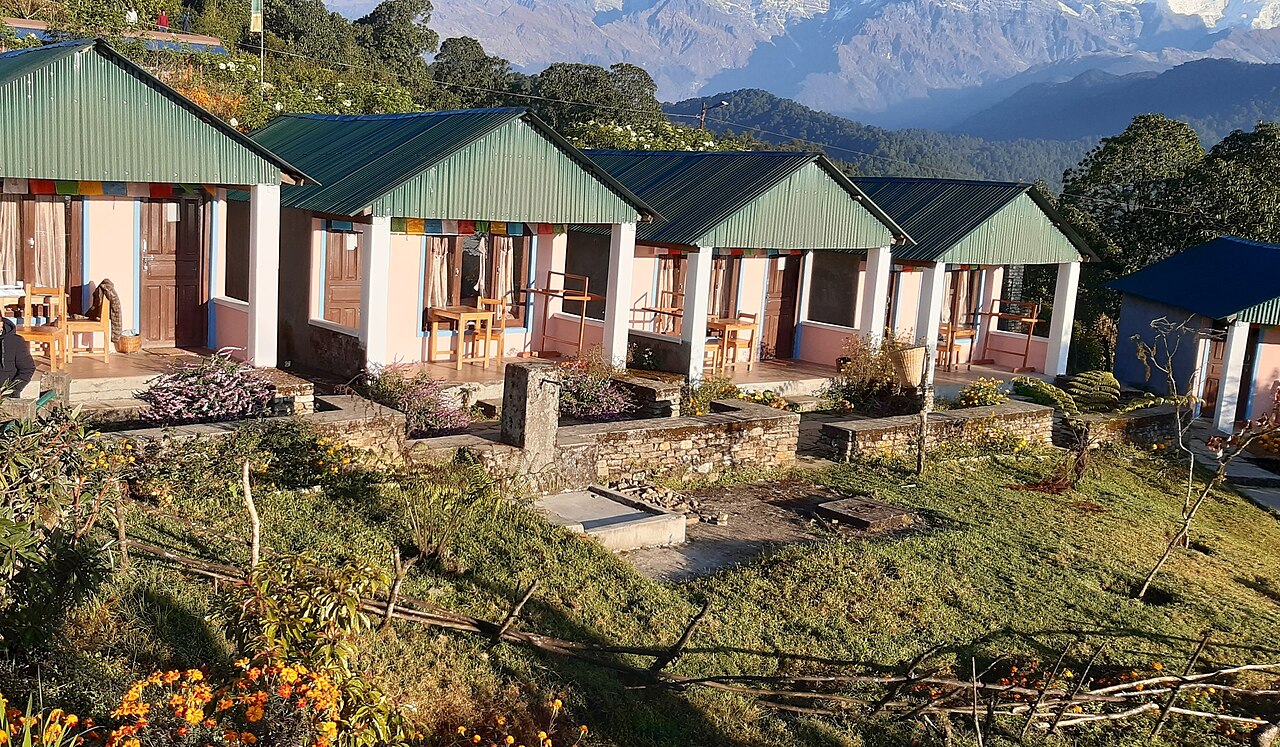
Featured photo: teahouse accommodation at Australian Base Camp, photographed by Sabina Bajracharya on December 2, 2019. Wikimedia Commons source, licensed under CC BY-SA 4.0. Resized; no other changes. The photograph illustrates lodge accommodation and does not identify a promised property on these itineraries.